Jhaymes Clark N. Caracuel
January 23, 2026
5
min. read
and updated on:
February 25, 2026

"If you're building or investing in a podcast app, here are the five trends that will define success:"
The Future of Podcast App Development: 5 Game-Changing Trends to Watch in 2026 is being shaped by explosive growth in consumption and fierce platform competition. If you're building or investing in a podcast app, here are the five trends that will define success:
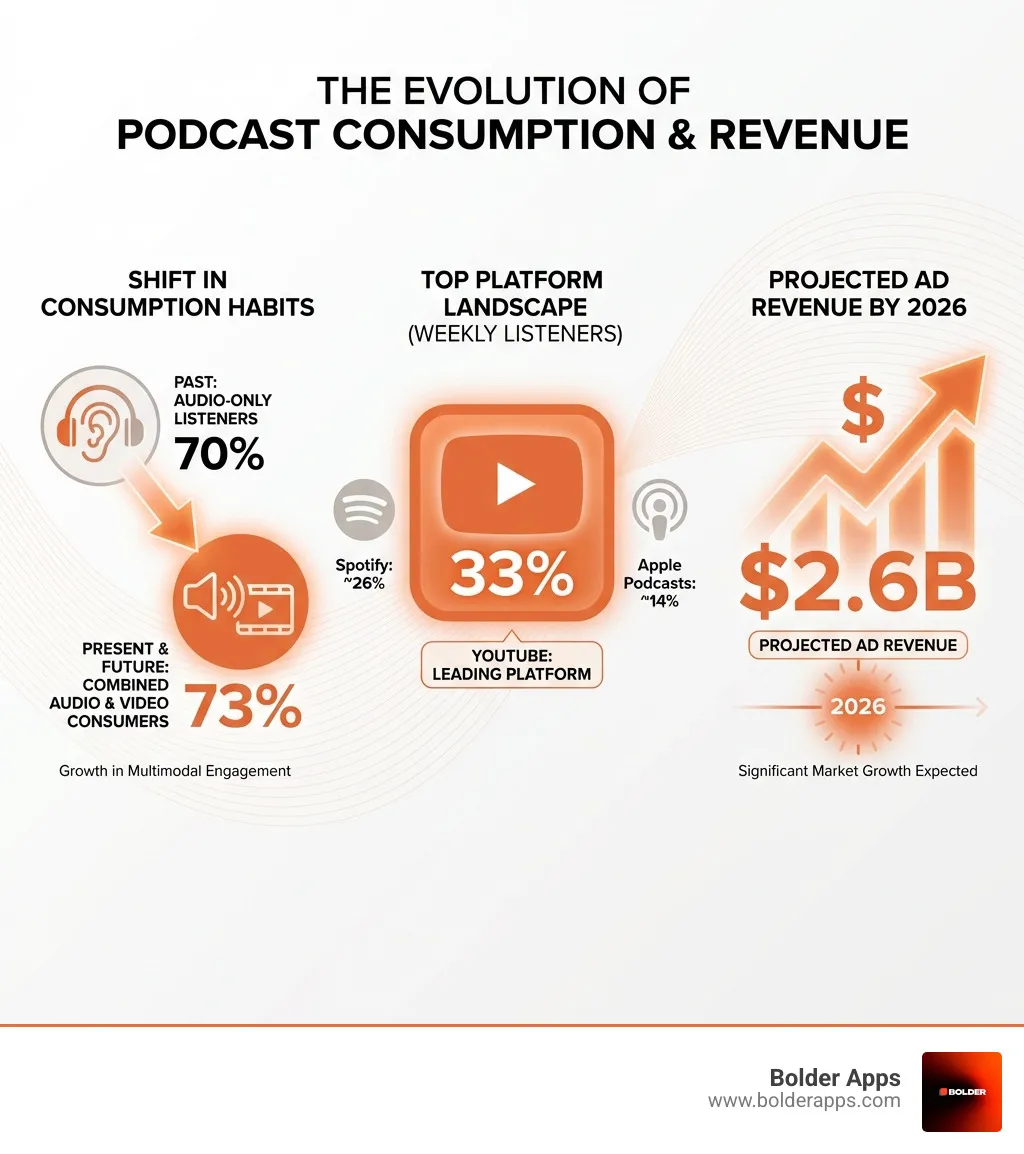
The numbers tell a compelling story. 73% of Americans have consumed a podcast in either audio or video form. Over 5 million shows now exist worldwide. And YouTube has emerged as the most-used podcast platform, capturing 33% of weekly listeners—ahead of Spotify at 26% and Apple Podcasts at 14%.
This isn't just about growth. It's about a fundamental shift in how people consume audio content.
The old model was simple: press play, listen, move on. The new model is interactive, visual, and intelligent. Listeners expect personalized recommendations. They want to watch as well as listen. They want to comment, share clips, and support their favorite creators directly.
For app developers, this creates both opportunity and pressure. The competition is brutal. Platforms like YouTube and Spotify are pouring resources into podcast features. Standalone apps must offer something different—something that leverages emerging tech to create experiences the big platforms can't match.
That's where these five trends come in. They represent the key battlegrounds where podcast apps will win or lose in 2026. Each trend addresses a core user need: better findy, richer content, deeper engagement, creator support, or seamless integration into daily life.
If you're a founder or business leader looking to build a high-impact podcast app, understanding these trends isn't optional. It's the foundation of your competitive edge.
Artificial Intelligence (AI) is no longer a futuristic concept; it's here, and it's rapidly becoming the core differentiator for successful podcast applications. In 2026, AI won't just be a fancy add-on; it will be integral to creating intelligent and responsive user experiences that keep listeners engaged and coming back for more. We're moving far beyond simple playback, leveraging AI to understand, personalize, and improve every aspect of the podcast journey.
The impact of AI on podcast app development in 2026 is expected to be transformative. AI is already optimizing podcasters’ workflows, making the entire process more accessible. Tools that once required specific know-how or extensive experience are now being democratized by AI, allowing anyone to create a show. This ease of creation means more content, and with more content comes an even greater need for AI-powered solutions within apps to manage the deluge and deliver value to listeners. The global AI in media & entertainment market, which was $25.98 billion in 2024, is expected to hit $99.48 billion by 2030, underscoring the massive investment and potential in this space.
One of AI's most significant contributions to podcast apps in 2026 will be hyper-personalization. Listeners are no longer content with generic recommendations; they expect their apps to understand their unique tastes and preferences. According to McKinsey, 71% of consumers expect companies to deliver personalized interactions, and this expectation is now spilling over into podcasting.
AI recommendation engines will become incredibly sophisticated, moving beyond simple genre matching to analyze listening habits, episode completion rates, skipped segments, and even emotional responses (if user-consented data allows). This will lead to truly personalized playlists and "you might also like" functionality that feels less like an algorithm and more like a trusted friend suggesting content. Imagine an AI-curated daily digest custom precisely to your mood and interests, surfacing obscure gems you'd never find otherwise. Semantic search capabilities will allow users to find podcasts not just by keywords, but by specific topics, themes, or even the nuances of a conversation, making content findy intuitive and effortless.
Beyond personalization, AI will dramatically improve the user experience (UX) and accessibility of podcast apps. Automated transcription will become a standard feature for virtually every episode, regardless of language, providing invaluable support for searchability and content repurposing. AI transcription and summarizer tools are already making it easy to transform audio or video podcasts into blog posts, and this functionality will be integrated directly into apps for both creators and listeners.
Real-time translation, powered by AI, will break down language barriers, allowing listeners to access a truly global library of content. AI-generated chapters and summaries will enable listeners to quickly grasp an episode's content, jump to relevant sections, or catch up on missed parts. Apple has already been expanding on platform metadata features, including automatic chapters and timed links, showcasing the industry's move in this direction. Furthermore, AI will refine audio quality within apps, intelligently removing smart silence and filler words to create a smoother, more professional listening experience. This focus on clarity and clean audio will significantly improve accessibility for hearing-impaired users, who can rely on accurate, automatically generated captions and transcripts to follow along, making podcast apps truly inclusive.
The podcast landscape is no longer just an audio frontier. In 2026, video podcasting is unequivocally moving from a niche trend to a mainstream expectation, fundamentally reshaping how we design and develop podcast applications. This shift is largely driven by the "YouTube effect," where visual content reigns supreme, and listeners increasingly expect a visual component to their favorite shows.
The statistics are compelling: YouTube is the service used most often for podcasts by 33% of US weekly podcast listeners (13+), ahead of Spotify at 26% and Apple Podcasts at 14%. This is not a subtle change; it's a monumental shift in user behavior. More than 1 billion monthly active viewers of podcast content on YouTube highlight the platform's dominance. Furthermore, 51% of Americans 12+ have watched a podcast, and 46% of podcast listeners prefer consuming them with video. In fact, over one-third of podcast listeners chose YouTube as their favorite podcast platform. The industry consensus is clear: 75% of people believe that video will become the default recording format. This means app developers must build comprehensive video capabilities directly into their podcast platforms, rather than treating them as an afterthought.
This evolution signifies a shift from the traditional "podcaster" identity, focused solely on audio, to a "showrunner" mentality, where creators manage a multi-format content experience. While 92% of people still describe themselves as listening to podcasts, the reality is that 31% of creators are already publishing full video episodes alongside their audio content, and this number is set to grow.
To support this video-first future, podcast apps need robust and intuitive video playback features. Seamless audio-to-video switching will be paramount, allowing users to effortlessly transition between listening in the background and watching the full video, depending on their activity or preference. Picture-in-picture (PiP) mode will be crucial for multitasking users, letting them watch a video podcast while navigating other apps. Background video playback, which essentially plays the audio even when the video isn't foregrounded, will maintain the flexibility that traditional audio podcasts offer.
High-quality adaptive streaming will ensure that video podcasts look great on any device and connection speed, automatically adjusting resolution to prevent buffering. Finally, extensive support for external devices like Chromecast and AirPlay will allow listeners to easily cast video podcasts to larger screens, turning their living rooms into a podcast studio experience.
Video is a game-changing trend because it opens up new avenues for engagement, findy, and monetization. Apps will need to provide in-app video clip creation tools, enabling listeners to easily snip and share compelling moments directly from the episode to social media. This user-generated promotion is incredibly powerful. Social sharing integration for these clips, including support for vertical video formats popular on platforms like TikTok and Instagram Reels, will be non-negotiable.
Beyond sharing, interactive video elements will become commonplace. Imagine clickable links within the video that take you to a product page, a guest's website, or additional resources. In-app Q&As and polls, similar to those Spotify has already introduced, will allow for real-time audience participation during video streams, turning passive viewers into active participants. Video fosters a better connection between creators and their audience, contributing immensely to building a loyal base. For podcast apps, integrating these features isn't just about keeping up; it's about providing the rich, dynamic experience that modern audiences expect from their content.
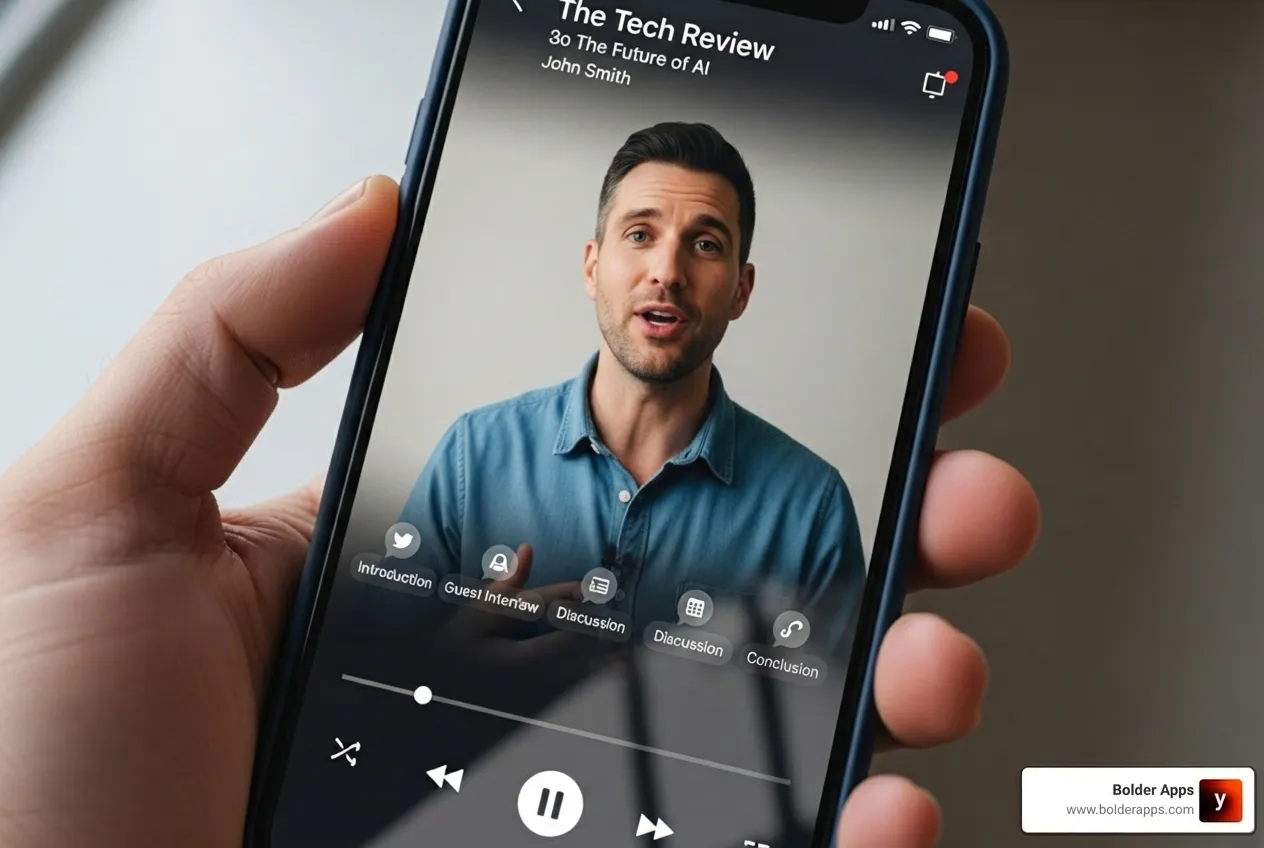
In the increasingly crowded digital landscape, the future of podcast apps in 2026 isn't just about delivering great content; it's about building vibrant, interactive communities around that content. We're moving beyond passive consumption, aiming to change listeners into active participants who feel a sense of belonging and ownership within the app. This strategy is vital for building user loyalty, combating churn, and effectively competing with the vast social media platforms that constantly vie for user attention.
Listeners today crave connection. They want to engage with the content, the creators, and fellow fans. Apps that facilitate this interaction will be the ones that thrive. It’s about creating a space where the conversation continues long after the episode ends, fostering a deeper bond between the audience and the show. For a broader understanding of how mobile apps are evolving to meet diverse user needs.
To truly foster community, podcast apps will need a suite of robust interactive features. Episode-specific comment threads will allow listeners to share their thoughts, ask questions, and discuss points directly related to the content, right within the app. This keeps the conversation centralized and accessible. Live chat functionality, especially for premieres, live recordings, or special events, will create a real-time, shared experience, making listeners feel like they're part of something bigger.
In-app Q&As and polls are already proving popular, with platforms like Spotify introducing these features. These allow creators to gauge audience opinion, answer questions directly, and make listeners feel heard. Furthermore, enabling listener-submitted audio or text comments that creators can potentially incorporate into future episodes will create an unparalleled sense of co-creation. Finally, direct messaging features, either between listeners or between listeners and hosts (with appropriate moderation and boundaries), can facilitate deeper connections and networking among the community.
Beyond individual interactive features, the goal is to build a thriving in-app social hub. This involves creating user profiles and following systems, allowing listeners to connect with friends, find what others are listening to, and follow their favorite creators. Show-specific forums or groups will provide dedicated spaces for fans of particular podcasts to gather, discuss, and share.
Gamification elements, such as badges for consistent listening, points for participation in discussions, or leaderboards for top contributors, can significantly boost engagement and foster a sense of friendly competition. Imagine open uping a "Super Listener" badge for completing every episode of your favorite series, or earning points for insightful comments that get upvoted by others. These features transform the listening experience into a social activity, turning casual listeners into loyal community members and ensuring that the app remains a central part of their podcast journey.
The future of podcast app development in 2026 is deeply intertwined with the ability to empower independent creators to earn a living directly within the app ecosystem. Moving beyond reliance on traditional, often opaque, advertising models, apps must facilitate sustainable in-app economies that benefit both creators and the platform. This focus on direct creator monetization is crucial for attracting top talent, ensuring diverse content, and fostering a healthy, thriving podcasting environment.
The podcast market is growing significantly, with podcast ad revenue projected to hit nearly $2.6B by 2026 in the US. However, despite this growth, only about 15% of independent podcasters are making money from their content. This highlights a critical gap: while the industry is booming, many creators struggle to monetize their passion. Podcast apps have a unique opportunity to bridge this gap by offering diverse, integrated monetization tools. This will not only attract creators but also foster a more direct relationship between them and their audience, leading to greater loyalty and higher-quality content.
Podcast apps in 2026 will offer a rich array of options for creators to diversify their revenue streams:
These diverse options move beyond the traditional advertiser-centric model, putting more control and revenue potential directly into the hands of creators.
For these monetization options to be successful, the podcast app itself must function as a robust and reliable monetization platform. This requires:
By providing these tools and infrastructure, podcast apps can become indispensable partners for creators, fostering a thriving digital economy. Considering the investment needed for such advanced features, understanding How Much Does It Cost to Make an App in 2026? is a crucial first step for any developer.
As our lives become increasingly connected and our devices more intelligent, the future of podcast app development in 2026 will heavily lean into voice and ambient user experiences (UX). We're talking about a world where interacting with your podcast app is often hands-free, seamlessly integrated into your daily routines, whether you're driving, cooking, working out, or simply relaxing at home. The rise of smart speakers, in-car infotainment systems, and wearables demands that podcast apps are designed for these diverse, often screen-less, consumption contexts. This shift is so profound that some are even predicting The Death of the Search Bar as voice interfaces take over.
The impact of voice search and smart speaker integration on podcast app design and functionality will be immense. Voice search optimization (VSO) is already a critical factor for findability, relating to how well content is found via AI assistants like Google Assistant, Alexa, and Siri. Audio is emerging as a vital interface for interaction, findy, and commerce due to the embedding of AI assistants in our daily routines. These conversations are becoming the customer journey, and podcast apps need to be at the forefront of this evolution.
Designing for voice means rethinking how users find and control their listening. Podcast apps will need sophisticated in-app voice search capabilities that understand natural language queries, not just precise keywords. Imagine saying, "Hey app, find me podcasts about sustainable living that are funny," and getting highly relevant results.
Beyond search, robust voice commands for playback control will be essential. Users will expect to say things like, "Skip intro," "Go to the next chapter," "Play something similar," or "Bookmark this segment" without ever touching their device. Furthermore, developing dedicated smart speaker skills for popular voice assistants will ensure a seamless home listening experience. This allows users to simply ask their smart speaker to play their favorite podcast or pick up where they left off, changing the entire interaction into an effortless, ambient experience.
The ultimate goal for 2026 is seamless integration with the broader smart ecosystem. This includes deep integration with Apple CarPlay and Android Auto, allowing users to safely and conveniently control their podcasts while driving. Research from Edison reports that individuals with Apple CarPlay or Android Auto in their vehicles tend to engage with podcasts for nearly twice the duration compared to those without these features. This statistic alone underscores the importance of a carefully designed in-car UX.
Dedicated smartwatch apps will provide on-the-go control, allowing users to pause, skip, or adjust volume directly from their wrist during a run or workout. Cross-device synchronization of playback progress will become an expectation, ensuring that whether you start an episode on your smart speaker, continue on your phone, and finish in your car, your listening experience is always perfectly aligned. The future is about making podcast consumption as effortless and integrated into daily life as possible, with your app anticipating your needs and responding to your voice.
The future of podcast app development is a thrilling landscape, rich with potential for innovation and growth. As we've explored, the trends for 2026 point towards an experience that is intelligent, interactive, visually engaging, and seamlessly woven into our daily lives. From AI-driven personalization and the ubiquity of video podcasts to vibrant in-app communities, direct creator monetization, and hands-free voice control, the bar for exceptional podcast apps is rising.
To succeed in this dynamic environment, you need more than just a brilliant idea—you need a strategic development partner who understands these complex trends and can translate them into a high-impact product. At Bolder Apps, we combine US-based strategic leadership with elite, senior-level offshore engineers, ensuring that your vision for the next generation of mobile app development is executed with precision and expertise. Our fixed-budget model and milestone-based payments mean your project stays on track and on budget, with complete transparency and no junior developers learning on your dime. We're here to help you build the podcast app that not only meets but exceeds the expectations of 2026 and beyond.
Ready to turn your innovative podcast app idea into a market-leading reality? Let's discuss your vision for the next generation of mobile app development.